Context and users
This top-up flow is used by people in-country and abroad to recharge family numbers back home. Many users are on low-end phones, limited data, and mixed language comfort. The task is usually done quickly and under pressure. Because it involves money, even small uncertainty feels risky. Users need clarity at every step, strong error prevention around number and operator selection, and a clear confirmation and receipt at the end.
Data-Driven Challenge and Insights
Our Support and Analytics teams shared evidence of a major drop-off in the top-up flow, alongside a high volume of related support tickets.
The data pointed to three main failure areas:
1. Mobile number entry errors (format, country code, digit count).
2. Operator selection confusion leading to mismatches, and
3. Leaving before payment (fees, total cost, and whether the recharge actually went through)
These insights directly shaped the redesign focus:
1. Make the flow more guided and predictable with a clear step indicator (Input → Confirm → Done).
2. Reduce manual entry risk with contact-based number selection and structured number input.
3. Make price and validity visible during package selection.
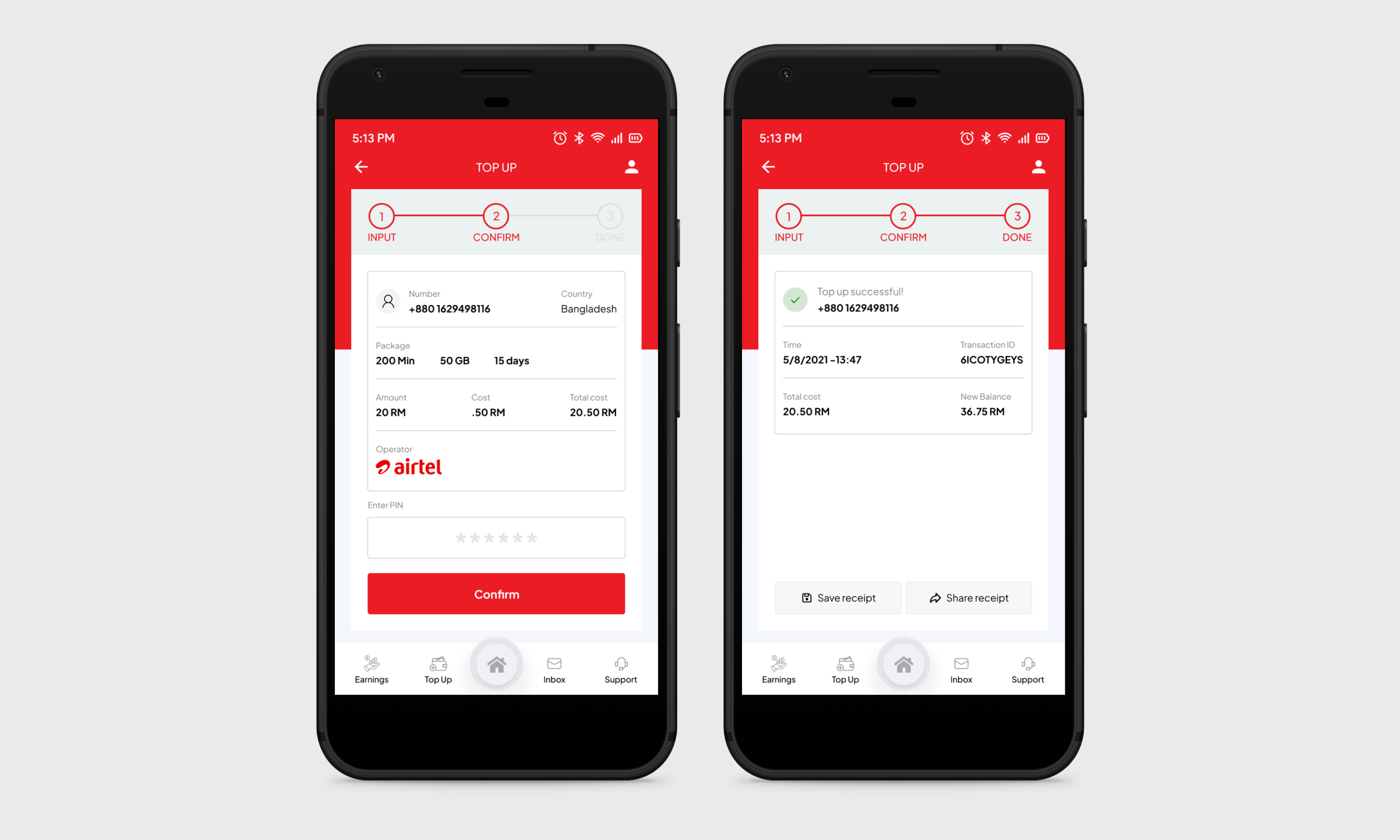
4. Add a clear overview step that surfaces number, country, operator, package or amount, cost, and total cost before PIN confirmation.
5. Provide a strong receipt at completion, with save and share actions for trust and proof.
Before vs After flow
Before flow (high friction)
Start top-up → Select country → Enter number → Select operator → Choose amount/package → Final check (fees + total) → Confirm.
After flow (simplified + trust-first)
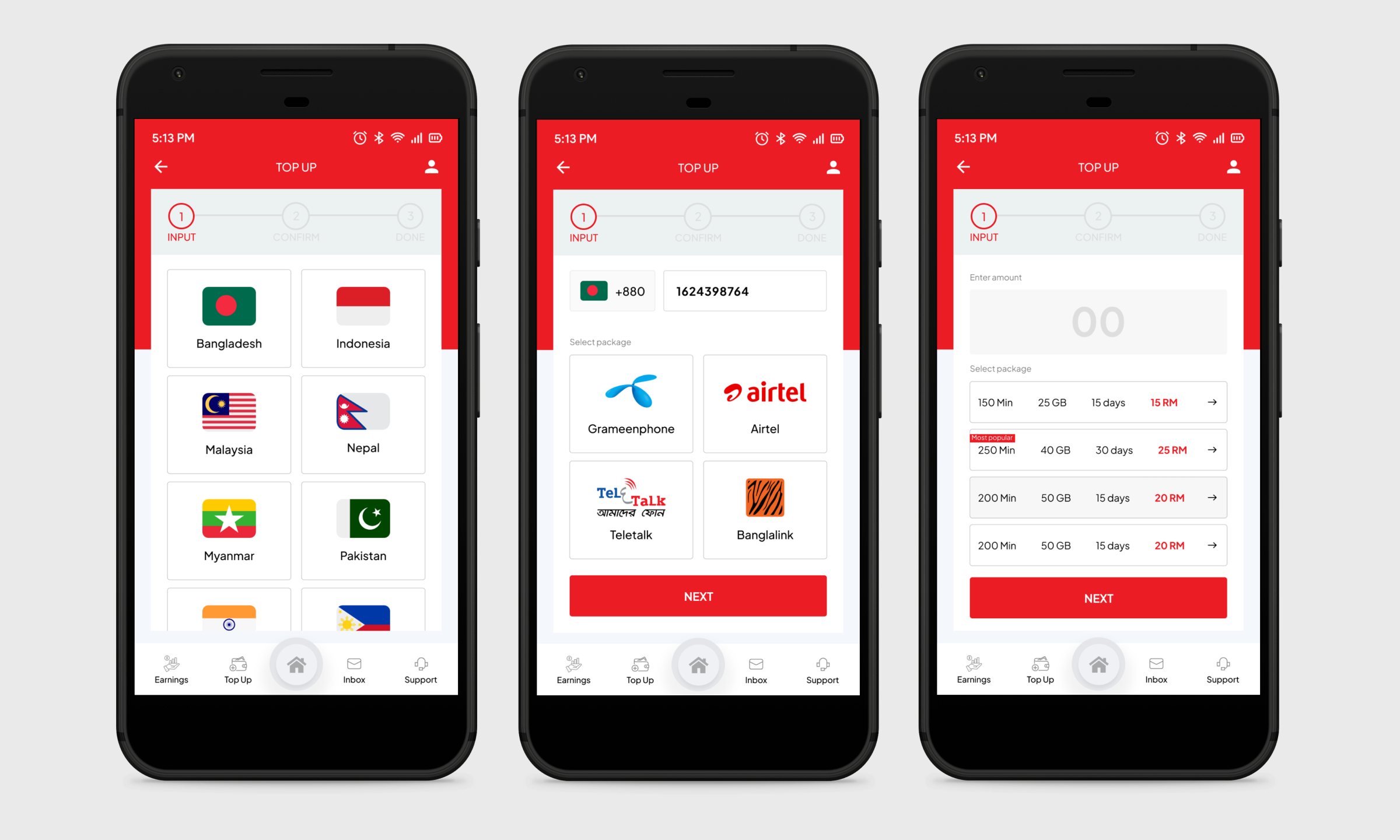
Top Up → Select country → Enter number (contact picker) + select operator → Enter amount or choose package (price + validity) → Overview + PIN (number, operator, costs) → Done (time, ID, total, new balance, save or share receipt).
New clarity layer: a step indicator (1 → 2 → 3) across the flow to reduce uncertainty and drop-off.
Key UX Decision
Decision 1: Error prevention during number and operator entry.
Many failures happen during number entry and operator selection. Manual typing and operator mismatch lead to failed recharges and frustration.
Design change
Added contact picker to reduce typing errors, separated country code from the main number field, kept operator selection explicit via scannable operator cards, and reinforced step context with a progress indicator.
Decision 2: Speed through fewer choices and smarter defaults
Migrant users face language barriers and low patience for long forms. Too many choices and steps slows them down and increases abandonment.
Design change
Exposed package value upfront (minutes, data, validity, price) on selection cards and reduced back-and-forth by grouping key inputs into a single Input step (country, recipient, operator, amount/package).
Decision 3: Building trust through clear breakdowns and actionable receipts
Users felt anxious about hidden fees and lacked a way to prove to their family members that the top-up was successful.
Design approach
Added a review screen that clearly breaks down amount, fee, and total cost with recipient and operator confirmation before PIN, and strengthened the success state with new balance plus save/share receipt actions.
Impact
- 35% fewer support tickets, lowering operational support load
- Sub-30s completion time, improving conversion on a revenue-critical flow
- Higher flow clarity, fewer user drop-offs at key decision points.
See the live: Sohoj App