
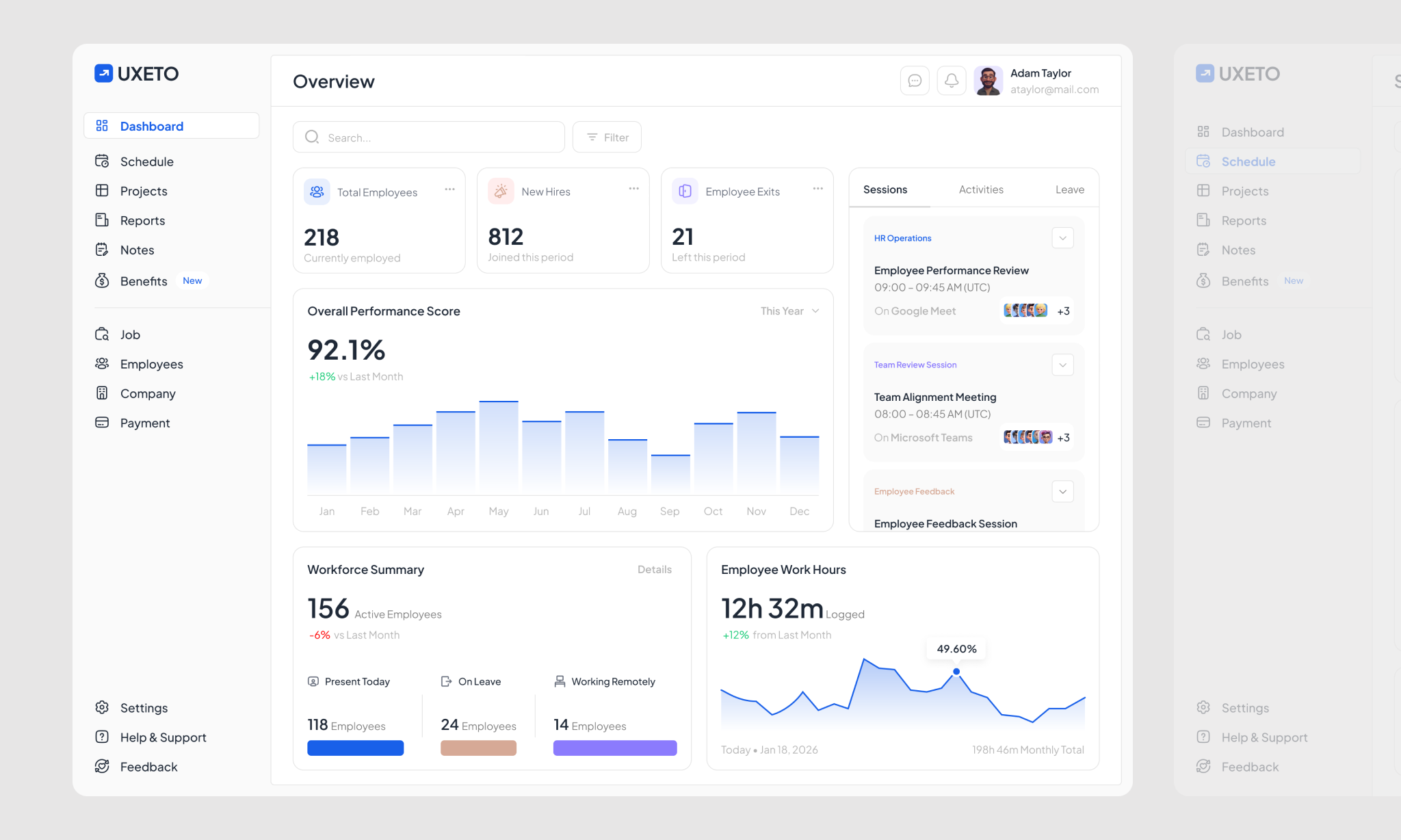
Modern HR managers and People Ops leads are currently bogged down by a fragmented ecosystem. Information is siloed across payroll software, recruitment trackers, internal wikis, and scheduling apps.
Enterprise HR teams lose approximately 20-30% of their daily productivity switching between disconnected tools. This fragmentation leads to:
Data Latency: Delayed insights on employee retention and recruitment health.
Mental Overload: Difficulty managing high-priority tasks (e.g., payroll discrepancies) alongside long-term strategic goals (e.g., diversity audits).
Operational Friction: High friction in simple cross-functional tasks, like checking a meeting room’s availability while reviewing a candidate’s portfolio.
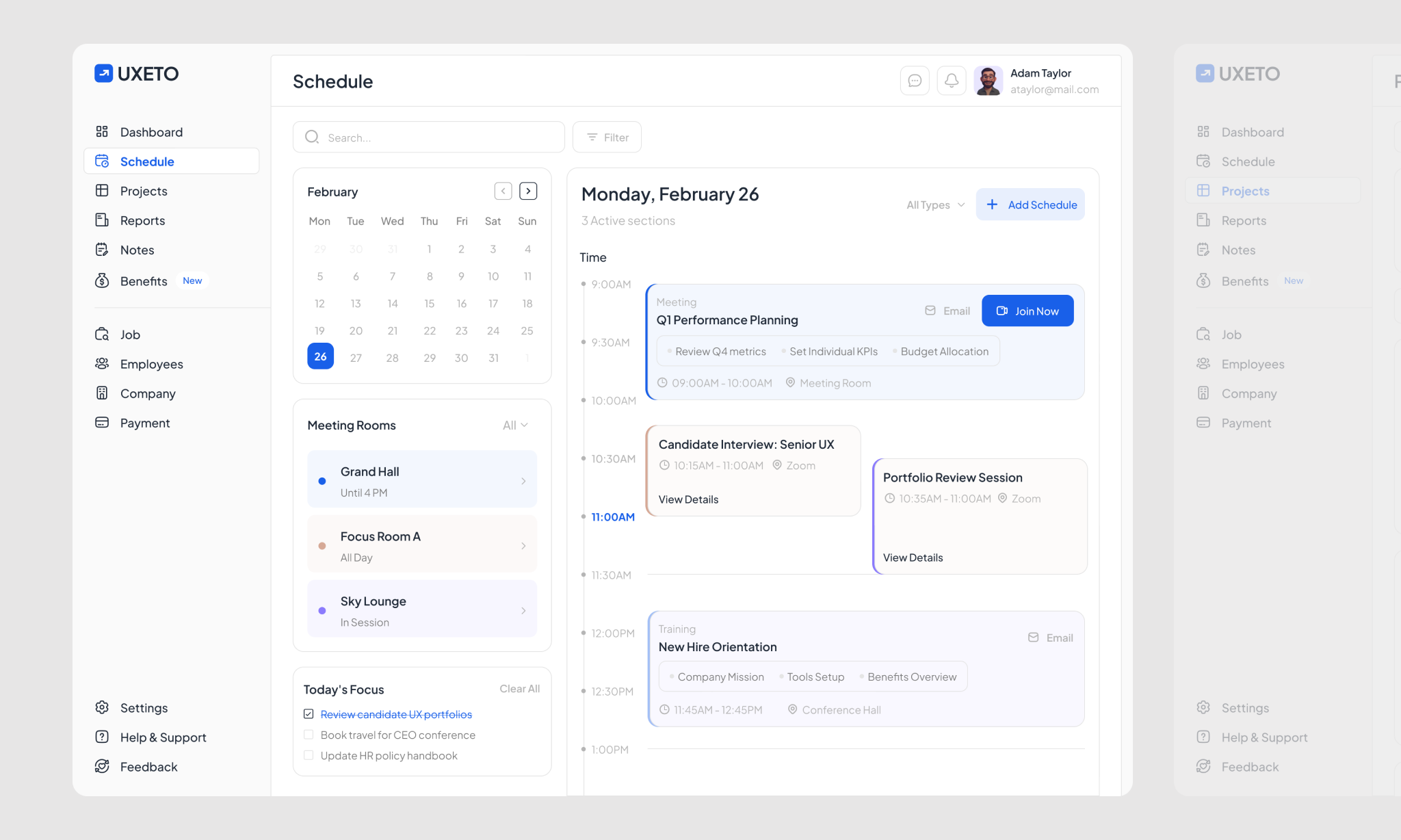
As the Senior Designer, my approach was to transition from a transactional interface (where users just input data) to an intelligent dashboard (where the UI provides actionable insights).
Strategic Pillars:
Modular Architecture: Using a consistent grid of “Metric Cards” and “Actionable Widgets” to ensure scalability across different modules (Payroll, Reports, Jobs).
Predictive UX: Integrating “HR Pulse Advice” and “Tip” components that use system data to suggest the next best action, reducing the user’s cognitive load.
Visual Hierarchy & Scannability: Utilizing a clean, “Soft UI” aesthetic with high-contrast typography to ensure that critical alerts (like a “98.2% Compliance Score” or “Low Performance Risk”) stand out instantly.
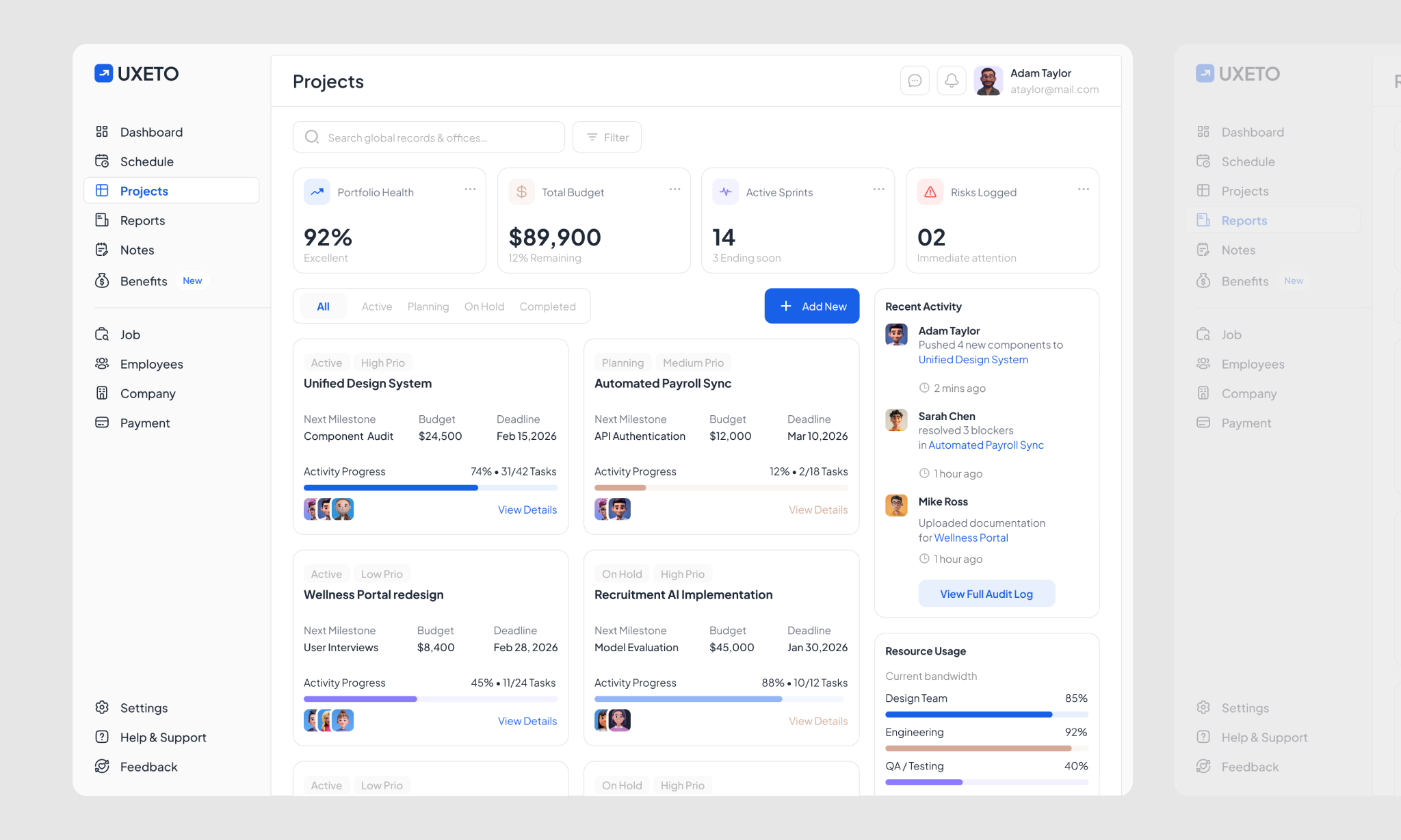
In the Reports module, we introduced the “Audit Pipeline” and “Pulse Advice.” Instead of just showing a turnover graph, the system interprets the data: “High-performers in Engineering cite ‘Lack of growth’ as the top exit reason.” This transforms the designer’s role from creating “charts” to creating “solutions.”
The Schedule view integrates room availability directly with the daily agenda. The “Today’s Focus” checklist acts as a persistent anchor, ensuring that tactical tasks (booking travel) don’t get lost in the sea of calendar invites.
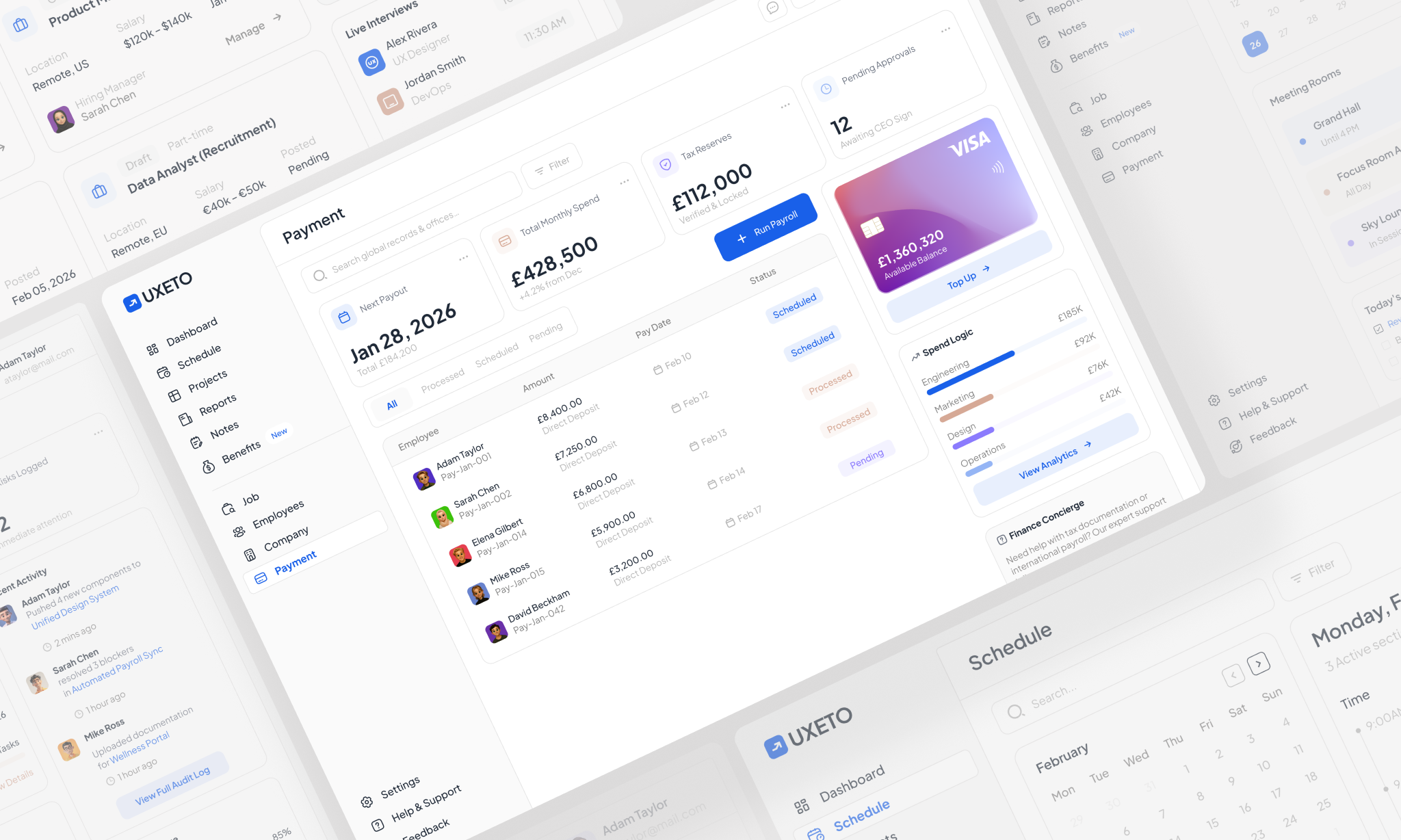
The Payment module treats payroll as a financial strategy, not just an accounting task. By visualizing “Spend Logic” by department, HR leads can see immediately if Engineering is over-budget compared to Marketing, allowing for proactive financial adjustments.
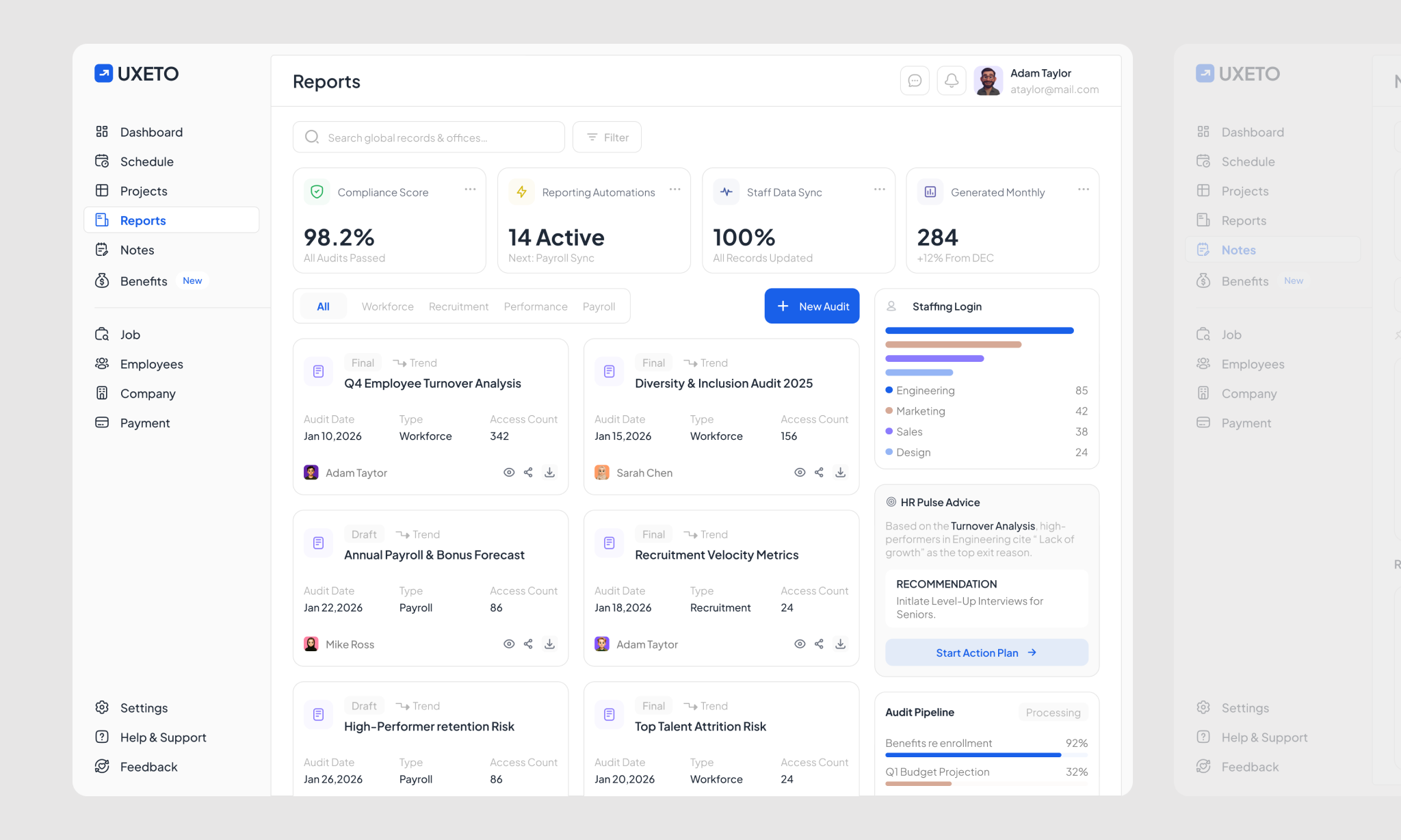
Design System: Built on a robust 8px grid system with a sophisticated color palette.
Micro-interactions: Integrated “Status Tags” (Scheduled, Processed, Pending) with color-coded semantics to provide immediate feedback on system state.
Information Density: Balanced high data density (necessary for ERPs) with white space to prevent user fatigue.
As an experimental project, success is measured by the reduction of “Time to Task” and “Error Rate” in critical workflows.
Quantitative Goal: 40% reduction in time spent generating monthly compliance and payroll reports.
Qualitative Goal: High “Ease of Use” scores from HR Leads, specifically regarding the transition between Recruitment (Jobs) and Onboarding (Employees).
Operational Impact: Improved “Recruitment Velocity” by surfacing bottlenecks in the Senior UX review phase directly within the UI.